
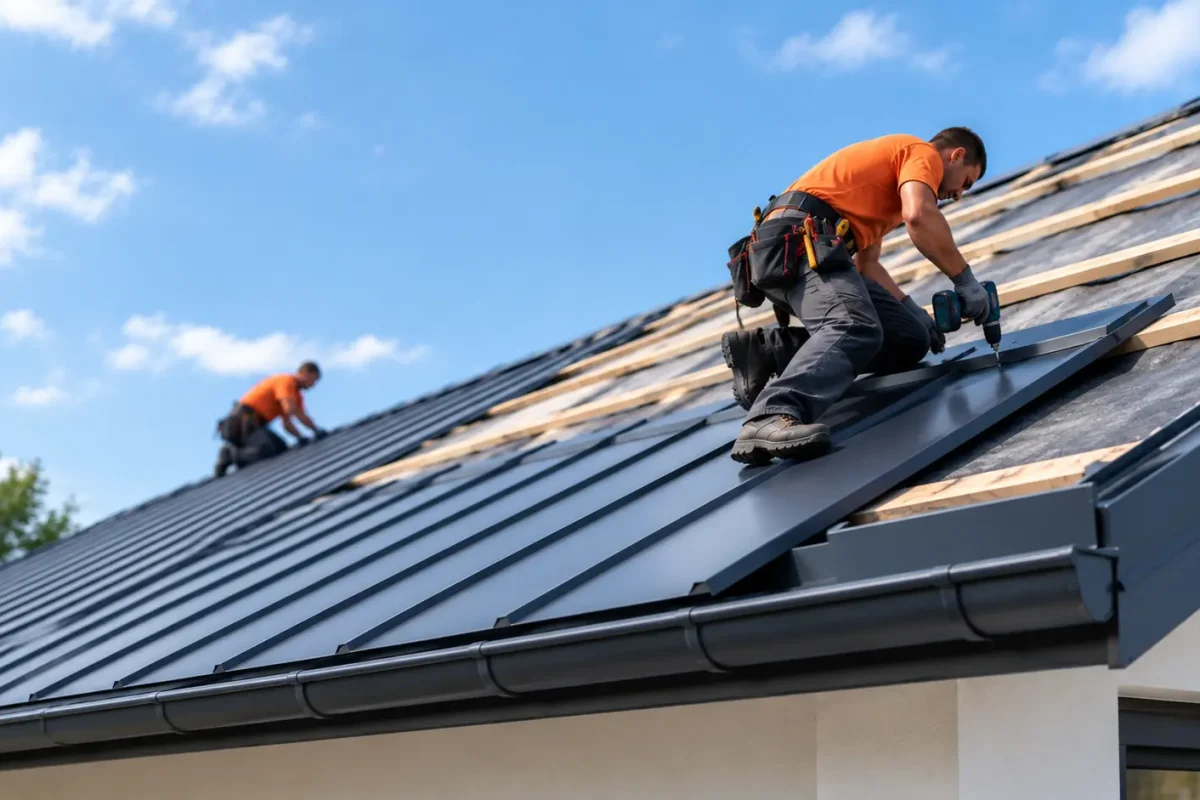
Metal roof installation in the Bay Area typically costs about $12–$22 per square foot for standing seam in 2026, which puts a 2,000 sq ft roof at roughly $24,000–$44,000. Budget panels cost less, and copper and zinc cost more. A metal roof lasts 40 years or longer and handles fog, wet winters, and fire-zone requirements well, but it costs roughly twice as much up front as asphalt shingles. This guide covers cost by panel type and roof size, the full installation process and timeline, and how metal performs in Bay Area conditions. If you’re planning a residential roofing project, use it to compare quotes with confidence.
Metal Roof Installation Cost in the Bay Area
Price depends mostly on the panel system and your roof’s complexity. Standing seam, the most popular choice for homes, hides the fasteners under raised seams and costs more than exposed-fastener panels.
|
Roof size |
Estimated cost (standing seam) |
|---|---|
| 1,500 sq ft |
$18,000 – $33,000 |
|
2,000 sq ft |
$24,000 – $44,000 |
|
2,500 sq ft |
$30,000 – $55,000 |
|
3,000 sq ft |
$36,000 – $66,000 |
These ranges cover materials, labor, tear-off, underlayment, flashing, trim, and disposal. They don’t include deck repair, which is common on older roofs, or solar panel work.
Want a number for your home? Request a free metal roof estimate based on measured roof dimensions and an inspection of your existing deck.
Metal Roof Installation Cost by Panel Type
|
Panel type |
Installed cost per sq ft | Typical lifespan |
Notes |
|---|---|---|---|
|
Exposed-fastener ribbed panels |
$7 – $12 | 25–40 years |
Lowest cost; screws and washers need periodic checks |
|
Standing seam steel |
$12 – $22 | 40–70 years |
Concealed fasteners; most popular residential option |
|
Standing seam aluminum |
$14 – $25 | 40–70 years |
Resists corrosion; a good fit for salt air near the bay and coast |
|
Metal shingles / stone-coated steel |
$9 – $16 | 40–50 years |
Shingle or tile look at lower weight than tile |
|
Copper or zinc |
$25 – $50+ | 70+ years |
Premium and custom; specialty installers only |
Compare these against the rest of your options in our guide to the best roofing material for Bay Area homes.
What Drives Metal Roof Installation Cost
Panel type, gauge, and finish. Thicker metal and premium paint finishes cost more but resist denting and fading better.
Roof complexity. Every valley, hip, dormer, skylight, and chimney needs custom trim and flashing. A simple gable costs far less per square foot than a roof with many angles.
Pitch and access. Steep roofs, two-story homes, and hillside lots add safety equipment and labor hours.
Tear-off and deck repair. Most installers recommend removing the old roofing so they can inspect the deck. Rotted plywood found at that stage is the most common source of extra cost.
Underlayment. Metal roofs run hot, so installers typically use a high-temperature synthetic or self-adhered underlayment.
Lead time for custom panels. Panels are often roll-formed to your roof’s length. Custom orders can take weeks to arrive, so plan ahead.
Permits. Fees and requirements vary by city. For San Francisco projects, see our guide to San Francisco reroofing permits.
Metal Roof Installation Process: Step by Step
- Inspection and measurement. The installer inspects the deck and structure and measures every plane. Drone or satellite measurement gets panel lengths right. See what a professional roof inspection covers.
- Permit and material order. The contractor pulls the permit and orders panels, trim, and flashing, often cut to your roof’s dimensions.
- Tear-off. The contractor removes old shingles or tile and hauls them away. Installing standing seam directly over shingles can let the shingle texture telegraph through the panels and hide the deck’s condition.
- Deck repair. Damaged or rotted sheathing is replaced so the roof has a flat, solid surface.
- Underlayment. A high-temperature underlayment goes over the deck, with self-adhered membrane at eaves, valleys, and penetrations.
- Drip edge and flashing. Install edge metal, valley metal, and wall and chimney flashing before the panels.
- Panel installation. Panels are laid from one edge to the other and secured with concealed clips that allow the metal to expand and contract with temperature changes. Seams are snapped or mechanically locked.
- Penetrations, ridge, and trim. The crew seals and finishes vent pipes, skylights, and the ridge cap.
- Final inspection and cleanup. The city inspector signs off, and the crew sweeps the site for fasteners and debris.
Timeline: Once panels are on site, most single-family installations take about 3–7 working days, depending on roof size and complexity. Schedule the work for the dry season if you can. If a storm hits mid-project, the underlayment protects the roof until panels go on.
Is a Metal Roof a Good Fit for Bay Area Homes?
Fog and salt air. Coated or aluminum metal resists corrosion better than bare steel. If you’re near the bay or coast, ask which metal and finish are rated for coastal exposure.
Wet winters. Smooth metal sheds water quickly, and concealed-fastener systems have fewer penetrations where leaks can start.
Fire zones. Metal is noncombustible, and tested assemblies can earn a Class A fire rating. In hillside areas, such as parts of Oakland, Berkeley, Danville and Los Gatos, check your parcel on the CAL FIRE Fire Hazard Severity Zone map, and confirm the specific product and underlayment assembly is Class A rated. Mapped zones still require ember-resistant vents.
Heat. Light, reflective finishes reduce attic heat gain and help meet California energy code requirements for cool roofs where they apply.
Weight and seismic. Metal is lighter than concrete or clay tile, which is why it’s a popular replacement for older tile roofs.
Solar. Standing seam accepts clamp-on solar mounts without drilling through the panels.
Older homes. Historic or older homes may need deck and framing work before you can install metal. Read about roofing challenges for older homes before you commit.
Noise. Metal on a solid deck with underlayment is typically no louder inside the home than other roof types. Open framing without sheathing is what makes metal roofs sound loud.
Metal Roof vs. Asphalt Shingles: Cost Comparison
|
|
Architectural asphalt shingles |
Standing seam metal |
|---|---|---|
|
Installed cost per sq ft |
$5.80 – $9.00 |
$12 – $22 |
|
Typical lifespan |
25–30 years |
40–70 years |
|
Maintenance |
Periodic repairs after storms |
Minimal; periodic inspection |
|
Fire rating |
Class A options available |
Class A assemblies available |
|
Best for |
Lower upfront budget |
Long-term ownership, fire zones, solar |
If you plan to stay in your home for 20+ years, metal’s longer life can offset the higher upfront price.
How to Choose a Metal Roof Installer
Metal installation is more technical than shingle work, and mistakes show up as leaks at seams and flashing. Before you sign, confirm the installer:
- Has standing seam experience. Ask to see completed metal projects you can review.
- Writes the full scope. Panel type, gauge, finish, underlayment, and trim should be listed.
- Plans for tear-off and deck repair. Rotted deck should be priced per sheet.
- Handles the permit. And schedules the inspection.
- Backs the work. Equinox gives a 10-year workmanship warranty. Ask for the manufacturer’s panel and paint warranty in writing.
- Is licensed and insured. Verify the CSLB license at cslb.ca.gov.
Homes in your area? Find your local team: roofing company in San Jose, roofing company in Oakland, roofing company in San Francisco, roofing company in Danville, and roofing company in San Rafael.
Once your new roof is in, a simple roof maintenance checklist keeps it in good shape.
FAQs
- How much does metal roof installation cost in the Bay Area?
Standing seam typically runs about $12–$22 per square foot installed in 2026, or roughly $24,000–$44,000 for a 2,000 sq ft roof. Exposed-fastener panels cost less, and copper and zinc cost much more. - How long does it take to install a metal roof?
Most single-family installs take about 3–7 working days once panels arrive. Custom-cut panels can take weeks to order, so plan the schedule ahead. - Can you install a metal roof over existing shingles?
Sometimes it’s allowed, but many installers recommend tear-off, especially for standing seam. Tear-off lets the crew inspect and repair the deck and avoids shingle texture showing through the panels. - Are metal roofs noisy in the rain?
Not usually. With solid sheathing and underlayment, a metal roof is typically as quiet inside the home as other roof types. - Is a metal roof good in a wildfire zone?
Metal doesn’t burn, and Class A-rated assemblies are available. In mapped fire zones, confirm that your specific panel, underlayment, and vents meet the requirements for your parcel. - How long does a metal roof last?
Typically 40–70 years, depending on the metal, the coating, and exposure. Coastal homes should use corrosion-resistant metal and finishes.
Get a Metal Roof Installation Quote
Equinox Roofing Solutions has completed 1,000+ roofs and holds a 4.9★ rating on Google and Yelp. We offer drone-assisted inspections and a 10-year workmanship warranty. Schedule your free roof inspection and get a written quote for your metal roof installation.