
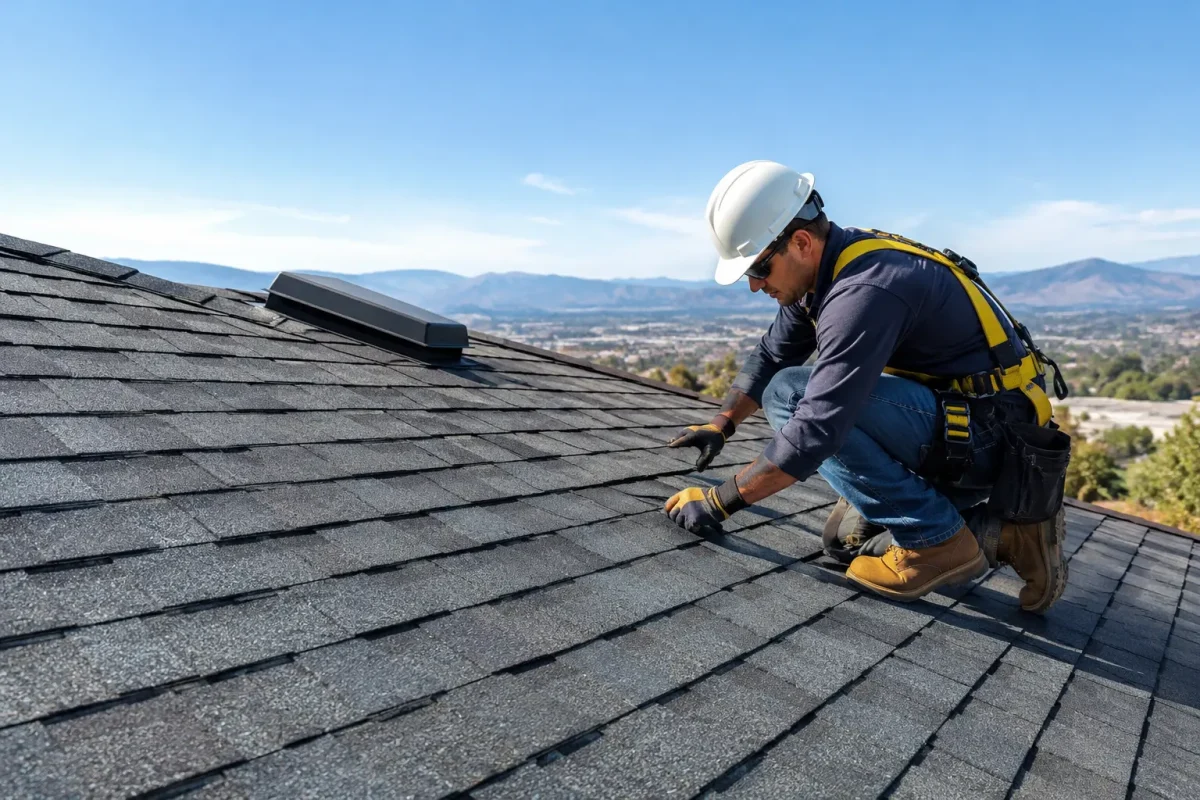
Class A fire-rated roofing is the highest roof fire rating, and California’s Chapter 7A building code requires it for most new roofs in mapped wildfire zones. Not every roof that looks fire-resistant qualifies. A rating depends on the specific product and how it’s installed, including the underlayment and vents beneath and around it. This guide explains what Class A means, which materials qualify, what Chapter 7A requires, what it costs, and how to confirm your roof meets the rules before a roof replacement.
This is general information, not legal or code advice. Requirements depend on your address and your city or county, so confirm with your building department.
What Is a Class A Fire-Rated Roof?
Roof fire ratings come from standardized tests (ASTM E108 and UL 790). The tests look at three things: whether fire can spread into the attic, whether flames spread across the roof surface, and whether the roof produces burning embers. Class A gives the greatest protection and Class C the least. Roofs are especially vulnerable to wind-blown embers, which is why the rating matters even if flames never reach your property.
|
Rating |
Level of protection |
What it means |
|---|---|---|
|
Class A |
Highest |
Effective against severe fire exposure |
|
Class B |
Moderate |
Moderate fire exposure |
|
Class C |
Lowest |
Light fire exposure |
Which Roofing Materials Are Class A in California?
| Material | Typical fire rating | What to check |
|---|---|---|
|
Asphalt shingles (fiberglass) |
Class A options available |
Check the specific shingle’s listing |
|
Concrete or clay tile |
Typically Class A |
Open-profile tile may need bird stops and fire-rated underlayment |
|
Steel metal panels |
Class A |
Confirm the tested assembly, including underlayment |
|
Aluminum, synthetic slate, rubber or composite |
Often rated by assembly |
May be Class C on its own and reach Class A only with specific underlayment |
|
Fire-retardant-treated wood shakes |
Class B, or Class A by assembly |
Untreated shakes are unrated and shouldn’t be used in fire zones |
For a closer look at one Class A option, see our guide to metal roof installation in the Bay Area.
Stand-Alone vs. Assembly Ratings
This is the detail most homeowners miss. Some products carry a Class A rating on their own. Others earn it only as part of a tested assembly: the roof covering plus a specific underlayment, deck, and installation method. Class B and C coverings can often reach Class A when paired with the right underlayment.
The practical takeaway: swapping the underlayment or changing the installation method can void the rating. Ask your contractor for the product’s listing and the exact assembly it was tested as, not just the brand name.
What Chapter 7A Requires for a Roof
Chapter 7A of the California Building Code sets wildfire-resistant construction standards for buildings in mapped Fire Hazard Severity Zones. For a roof, that generally means:
- A Class A roof covering assembly. New roofs and reconstructed roofs in mapped zones must meet it.
- Fire-rated underlayment where needed. Some assemblies, such as roofs with an airspace between the covering and the deck, need it over combustible decking.
- Ember-resistant vents. Attic and roof vents must be tested and listed for wildfire use. Ordinary vents let embers in.
- Eave and bird-stop details. Open-profile roofing like barrel tile needs closures at the eaves.
- Gutter and rain-gutter requirements. Debris in gutters is a fuel source, so gutters or covers are commonly required to be noncombustible.
Exact details vary by assembly and jurisdiction. Your contractor and building department can confirm what applies at your address.
Do You Need a Class A Roof in Walnut Creek and the Bay Area?
It depends on where your parcel sits. Rules apply in mapped zones, which are most common in hillside neighborhoods and areas next to open space. Parts of the East Bay hills and Silicon Valley foothills fall in these zones, including areas near Oakland, Berkeley, Danville, and Los Gatos. Some Walnut Creek parcels near open space may be mapped too.
To check, look up your address on the CAL FIRE Fire Hazard Severity Zone map and ask your city’s building department which rules apply.
Partial reroofs are treated differently in some places. For example, one Orange County city’s fire-zone summary requires Class A for new or reconstructed buildings but allows Class B or better when 50% or less of the roof is replaced. That’s one city’s rule, so ask yours before assuming a repair avoids the requirement.
Class A Roofing Cost in California (Estimates)
Class A materials span the whole price range. The fire rating itself is rarely the main cost driver. Material choice, roof complexity and required extras are.
| Class A option | Installed cost per sq ft | Notes |
|---|---|---|
|
Architectural asphalt shingles |
$5.80 – $9.00 |
Lowest-cost Class A option for most homes |
|
Composite slate |
$8.50 – $15 | Check that the specific product and underlayment are listed as Class A |
| Standing seam metal | $12 – $22 |
Noncombustible; confirm the tested assembly |
|
Concrete or clay tile |
$12.50 – $26 |
Heavy; may need structural review |
Not sure whether your roof meets the rules? Request a free roof inspection, and we’ll check the material, underlayment, and vents.
Class A Roofing and Homeowners Insurance
Wildfire risk has changed how insurers treat California homes. Some carriers ask for the roof’s material, age, and fire rating when you apply or renew. Keep your paperwork: the product listing, invoice, permit, and final inspection. Some insurers or programs may offer discounts for wildfire-resistant upgrades, but it varies, so ask your agent whether a Class A roof and ember-resistant vents qualify. A new roof doesn’t guarantee coverage or a lower premium.
To understand what a policy usually covers after damage, read our guide on whether homeowners insurance covers roof damage.
How to Confirm Your Roof Is Class A
- Find the product listing. The manufacturer’s data sheet should state the fire rating and the tested assembly.
- Check the State Fire Marshal listing. Products and assemblies that meet Chapter 7A are listed in the state’s WUI Product Handbook. The UC Fire Network’s roof guidance explains the basics.
- Ask for the installed assembly. Underlayment, deck, and details must match what was tested.
- Inspect vents and gutters. Old vents and plastic gutters are common weak points. A professional roof inspection covers them.
- Keep roof and gutter debris clear. Our roof maintenance checklist lists what to do each season.
FAQs
- What is the highest fire rating for a roof in California?
Class A. It gives the greatest protection against fire spread and burning embers under standard fire tests. - Is a Class A roof required in Walnut Creek?
It’s required in mapped Fire Hazard Severity Zones. Some Walnut Creek parcels near open space may be mapped, so check your address on the CAL FIRE map and with your building department. - Can I install a Class A roof over my existing roof?
Some jurisdictions allow an overlay, but tear-off is usually recommended so inspectors can review the whole assembly; in mapped zones, the complete assembly must meet code. Ask your city. - Is a metal roof Class A?
Steel metal panels are commonly Class A, but the rating depends on the specific product and the underlayment it was tested with. Confirm the listing. - Do I need ember-resistant vents?
In mapped fire zones, yes. Attic and roof vents must be tested and listed for wildfire use. - Will a Class A roof lower my insurance premium?
Not necessarily. Some insurers recognize wildfire-resistant upgrades, but it varies by company. Ask your agent and keep your documentation.
Get a Free Roof Inspection for Fire-Rating Compliance
Equinox Roofing Solutions has completed 1,000+ roofs and holds a 4.9★ rating on Google and Yelp. We offer drone-assisted inspections and a 10-year workmanship warranty. Schedule your free roof inspection and get a written assessment of your roof’s materials, underlayment, and vents.