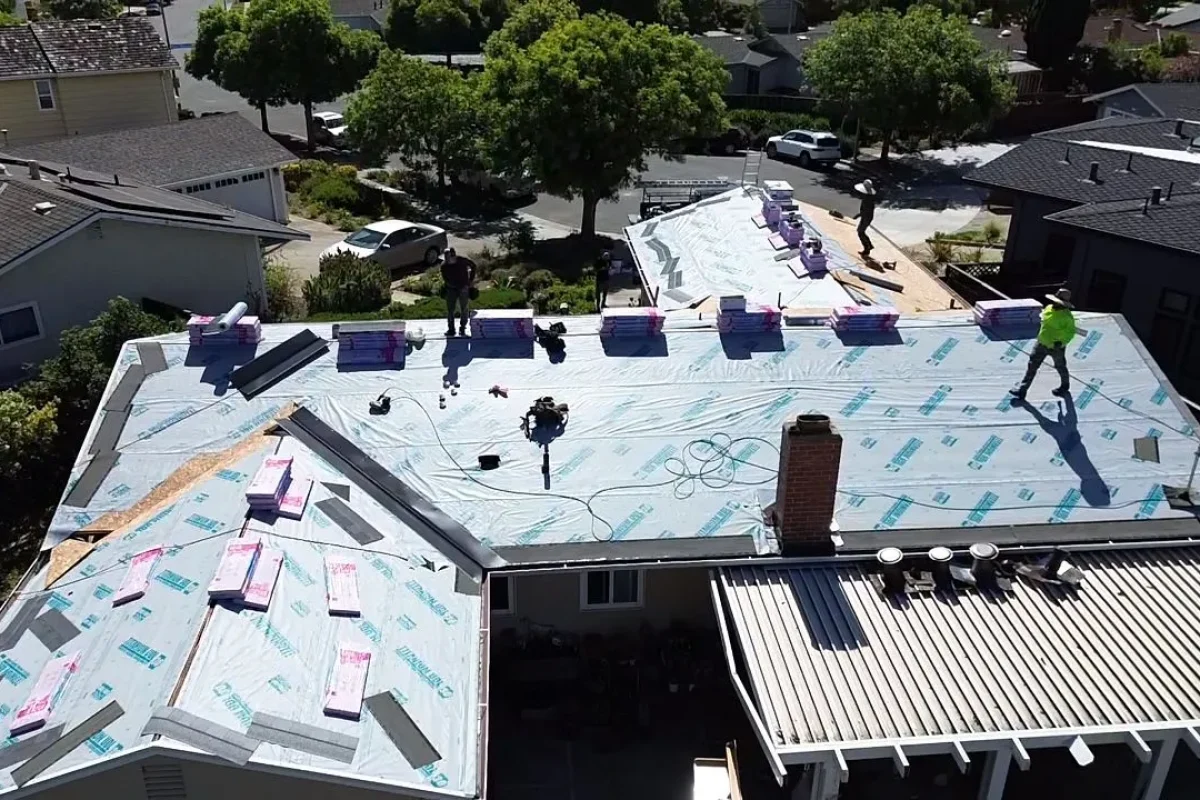
Most California homeowners pay for roof replacement financing with one of five options: cash savings, a personal loan, a home equity loan or HELOC, contractor-arranged financing or PACE. Each has different costs and risks. Because roof replacement cost in the Bay Area typically runs about $13,000–$30,000, the way you pay can change the total you spend by thousands of dollars. This guide compares your options, shows sample monthly payments, explains PACE and its risks, and covers what to check before you sign.
This is general information, not financial, legal, or tax advice. Lenders set loan terms, which vary by credit, income, and equity. Talk to a lender or financial advisor before borrowing.
How Much Does the New Roof You’re Financing Cost?
Start with a realistic number. Prices depend on roof size, material, and the condition of your deck, and they differ by area: Orange County roof replacement cost runs differently from the Bay Area, and metal roof installation costs more up front than asphalt shingles. A written quote based on a measured roof lets you borrow only what you need, so start with a professional roof inspection.
Roof Replacement Financing Options Compared
|
Option |
Secured by your home? | Rate type | Best for | Watch out for |
|---|---|---|---|---|
|
Cash or savings |
No |
None |
Avoiding interest |
Draining your emergency fund |
|
Personal loan |
Usually no |
Usually fixed |
Speed; no lien on your home |
Higher rates than secured loans; origination fees |
|
Home equity loan |
Yes |
Usually fixed |
Predictable payment |
Closing costs; your home is collateral |
|
HELOC |
Yes |
Usually variable |
Flexible draws; covering surprise deck repairs |
Payments can rise; your home is collateral |
|
Contractor-arranged financing |
Varies |
Varies |
Convenience; promotional offers |
Fees built into the price; deferred-interest promos |
|
PACE |
Property tax lien |
Fixed |
Eligible energy-efficient upgrades |
Lien on your property; sale and refinance complications |
| 0% intro credit card | No | Promo, then high APR | Small jobs repaid within the promo |
Very high rates once the promo ends |
Sample Monthly Payments on a $20,000 Roof Loan
Here’s what a $20,000 loan costs at different rates and terms. These are illustrative calculations, not an offer, and your rate depends on your lender and credit.
|
Loan term |
7% APR |
9% APR |
11% APR |
|---|---|---|---|
|
5 years |
$396/mo ($3,761 interest) |
$415/mo ($4,910 interest) |
$435/mo ($6,091 interest) |
|
10 years |
$232/mo ($7,866 interest) |
$253/mo ($10,402 interest) |
$276/mo ($13,060 interest) |
|
15 years |
$180/mo ($12,358 interest) |
$203/mo ($16,514 interest) |
$227/mo ($20,917 interest) |
A longer term lowers the monthly payment but raises the total interest. On a 15-year loan at 11%, you’d pay more in interest than the roof cost. Want a written quote to take to a lender? Request a free roof inspection, and we’ll document your roof’s condition and provide an itemized estimate.
How PACE Financing Works in California (and Its Risks)
PACE (Property Assessed Clean Energy) financing is repaid through an assessment added to your property tax bill. Eligible improvements vary by program and focus on energy efficiency. Cool-rated roofing has been among the eligible products in some programs, but a standard re-roof may not qualify. Confirm eligibility with the program before you plan around it.
California regulates PACE. Program administrators must determine your reasonable ability to pay, based on income, assets, and debts, and a contractor can’t begin work before that determination. So PACE isn’t a no-credit-check option.
The main risks:
- A lien on your property. You repay the assessment through your property taxes. Missing payments can lead to serious consequences, including foreclosure.
- Sale and refinance complications. Many mortgage lenders restrict or don’t allow PACE, and you may have to pay off the balance when you sell or refinance.
- Contractor and administrator licensing. The California DFPI’s PACE guidance recommends checking both licenses before you sign.
Tax Credits and Rebates for a New Roof in 2026
Don’t count on a federal tax credit. The federal Energy Efficient Home Improvement Credit (Section 25C) ended for property placed in service after December 31, 2025, and roofs weren’t eligible under its current version. The Residential Clean Energy Credit for solar (Section 25D) also ended for 2026 installations. Check with a tax professional about anything you plan to claim, and ask your utility and local government about current rebate programs.
How to Compare Roof Financing Offers
- Compare APR, not just the interest rate. APR includes many fees and shows the true yearly cost.
- Ask about fees. Origination fees, closing costs, and contractor or dealer fees can add hundreds or thousands.
- Check whether the price changes. Ask whether the roof’s price is the same for cash and financed jobs.
- Read promotional terms. “No interest if paid in full” offers may charge interest from day one if you miss the deadline.
- Look for prepayment penalties. You should be able to pay a loan off early.
- Get terms in writing before work starts. Compare at least three offers.
- Verify licenses. Check your contractor’s CSLB license at cslb.ca.gov, and verify lenders and PACE administrators through the state.
Walk away from anyone who pressures you to sign the same day or won’t put terms in writing.
Before You Borrow: Repair, Replace or Claim Insurance?
Borrow for a roof only after you know whether you need one. If the damage is localized, repair may cost far less, and the choice between repair and replacement depends on the roof’s age and the extent of the damage. Not sure yet? Look for the signs your roof needs repair. If a leak can’t wait, emergency roof repair can protect your home while you arrange financing.
If a storm or tree caused the damage, insurance may pay for part or all of it. Check whether homeowners insurance covers roof damage before you take on debt.
FAQs
- What credit score do I need to finance a roof replacement?
It depends on the product. Unsecured personal loans typically weigh credit most heavily. HELOCs and home equity loans consider credit and your equity. PACE requires an ability-to-pay determination. Ask each lender for its requirements. - Is a HELOC or personal loan better for a roof?
A HELOC often has a lower starting rate and flexible draws, but it’s secured by your home and usually has a variable rate. A personal loan is usually fixed-rate and doesn’t put your home at risk, but the rate is often higher. - Is PACE a good way to pay for a new roof?
It can be, if your roof qualifies and you plan to stay in the home. But it’s a lien on your property and can complicate a sale or refinance. Read the terms carefully and compare it with other loans. - Are there tax credits for a new roof in 2026?
The federal home energy credits ended for 2026, and roofs weren’t eligible under the current efficiency credit. Ask a tax professional and check for local or utility rebates. - Does homeowners insurance pay for a roof replacement?
Only when a sudden covered event, such as a storm or tree damage, caused the damage. Insurance doesn’t cover wear or age. It may cover part of the cost, so check your policy first. - How can I avoid overpaying when I finance a roof?
Get itemized written quotes from several licensed contractors, ask whether financing changes the price, compare APRs and fees, and don’t sign until you’ve read the terms.
Get a Written Roof Quote Before You Finance
Equinox Roofing Solutions has completed 1,000+ roofs and holds a 4.9★ rating on Google and Yelp. We offer drone-assisted inspections and a 10-year workmanship warranty. Schedule your free roof inspection and get an itemized quote you can take to any lender.