
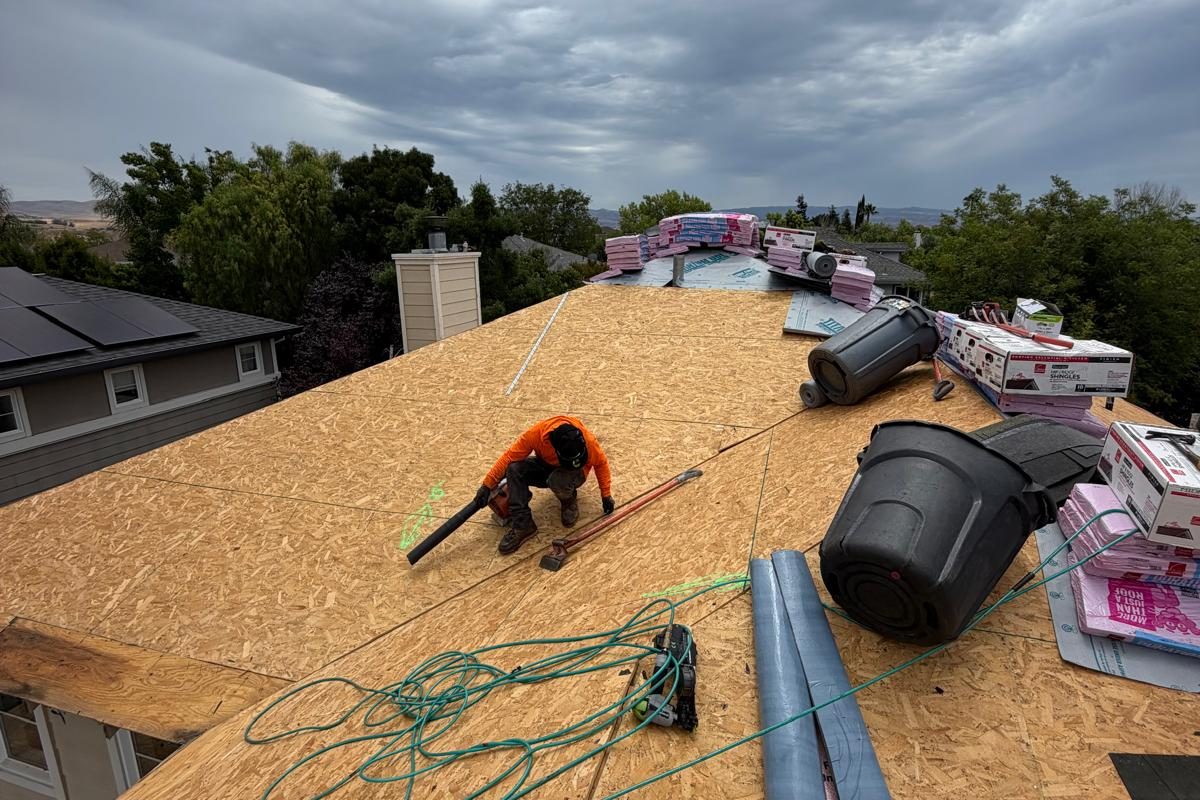
The Roof Replacement Cost in the Bay Area in 2026 commonly falls between about $12,000 and $35,000 for many standard residential projects, although larger homes, premium roofing materials, difficult access, structural repairs or complex roof designs can push the total considerably higher. The only reliable way to know what your property will cost is to inspect the roof, measure the actual roof area and determine what work is required beneath the existing material. Equinox Roofing works with Bay Area property owners to evaluate those conditions before a replacement scope is finalized.
A roof replacement is rarely priced by looking at the home’s floor area alone. Contractors also consider roof pitch, roofing material, number of existing layers, condition of the decking, flashing details, ventilation, disposal, site access and local project requirements. This is why two Bay Area homes of similar size can receive very different estimates.
What Is the Average Roof Replacement Cost in the Bay Area in 2026?
For budgeting purposes, homeowners planning a conventional replacement should generally think in terms of a five-figure project rather than a single advertised price. One current Bay Area roofing guide places many projects between $12,000 and $35,000, with a typical 1,800- to 2,200-square-foot home using architectural asphalt shingles around $14,000 to $24,000. Another local 2026 guide places a typical 2,000-square-foot asphalt roof around $15,000 to $35,000.
San Francisco data illustrates how much location can matter. Angi’s August 2026 figures show an average San Francisco replacement cost of about $16,109, with most reported projects between roughly $10,239 and $22,586. These numbers are useful for planning, but they should not be treated as a quote for an individual property.
Quick 2026 Bay Area Cost Guide
| Roofing situation | Approximate planning range |
|---|---|
| Standard residential replacement | $12,000–$35,000+ |
| Typical architectural asphalt project | Often around $14,000–$24,000+ |
| Premium or complex roofing project | Can exceed $35,000 |
| Metal roofing on a typical home | Often $25,000–$55,000 |
| Tile roofing on a typical home | Often $30,000–$65,000 |
These are broad planning figures rather than fixed prices. Current local pricing guides show wide variation even for similar roof sizes, which is why an on-site inspection and detailed proposal matter.
What Factors Affect Roof Replacement Cost in the Bay Area?
1. Actual Roof Size
Roofing contractors generally calculate material quantities using the roof surface rather than the home’s interior square footage. One roofing “square” equals 100 square feet of roof area.
A 2,000-square-foot house does not automatically have a 2,000-square-foot roof. Multi-story layouts, attached garages, roof overhangs and roof pitch can all change the surface area that must be removed and replaced.
Because material quantities, underlayment, flashing and labor increase with roof area, accurate measurement is one of the first steps in building a reliable estimate.
2. Roofing Material
Material selection can make a major difference in total cost.
Architectural asphalt shingles generally remain one of the more economical choices for pitched residential roofs. Metal and tile normally require a larger initial investment, while flat and low-slope properties may use completely different systems such as TPO or modified bitumen.
Current Bay Area estimates put asphalt below many metal and tile installations, while premium materials can move project totals well above the standard replacement range.
Homeowners considering a complete reroof can review Equinox’s residential roofing services to understand how material selection, roof condition and the needs of the property fit into the replacement decision.
3. Tear-Off and Existing Roof Layers
Replacing a roof usually involves more than installing new material.
The existing roofing may need to be removed first. Additional layers increase labor, disposal volume and the time required to expose the roof deck.
Older properties can also reveal previous repairs, deteriorated underlayment or materials installed at different times. These conditions may not be fully visible until tear-off begins.
A detailed proposal should therefore explain whether removal and disposal are included rather than quoting only the visible new roofing material.
4. Roof Decking and Structural Repairs
The condition underneath the existing roofing can substantially affect the final price.
Leaks, long-term moisture exposure or deterioration can damage sections of the roof deck. If deteriorated decking is discovered during removal, it may need to be replaced before the new roofing system is installed.
This is one reason unusually low quotes should be reviewed carefully. Homeowners should understand how potential decking repairs will be priced if hidden damage is discovered after work begins.
5. Roof Pitch and Complexity
A simple roof with large uninterrupted surfaces is generally easier to work on than a roof with multiple valleys, dormers, skylights, chimneys and complex transitions.
Steeper roof sections can also require additional safety procedures and more labor.
Complexity matters because roofing contractors are not simply charging for materials; they are pricing the time and workmanship needed to correctly complete edges, penetrations, valleys and flashing details.
6. Property Access
Access is especially important in parts of the Bay Area.
Closely spaced buildings, narrow driveways, hillside properties and limited staging areas can affect how crews deliver roofing materials, position equipment and remove debris.
These conditions are particularly relevant when planning work with a roofing company in San Francisco, where dense properties and varying roof types can make project logistics very different from a suburban reroof.
San Francisco-specific price data also tends to run above many national roofing estimates, with labor, property configuration and access contributing to overall project costs.
7. Your Bay Area Location
“Bay Area roofing cost” is useful as a regional benchmark, but San Jose, San Francisco, Marin County, the East Bay and Peninsula communities should not automatically be expected to have identical project costs.
Local labor conditions, roof type, property access and project requirements vary.
For example, homeowners working with a roofing company in San Jose may have a pitched shingle or tile roof with easier site access, while a similarly sized San Francisco property could have a low-slope system, parapet walls and more restrictive material staging.
Current 2026 cost estimates for San Jose also vary considerably, reinforcing why a local roof inspection is more useful than applying one Bay Area average to every home.
8. Permits and Code Requirements
Permit requirements and fees can differ depending on the city, jurisdiction and scope of work.
That means homeowners should be cautious with online articles that assign one universal “Bay Area permit fee” to every roofing project.
The correct approach is to determine the property jurisdiction and project scope before confirming what permits, inspections or documentation apply.
Permit-related expenses should also be clearly identified in the contractor’s proposal so you understand whether they are included or billed separately.
9. Flashing, Drainage and Roof Penetrations
The field of the roof is only one part of a complete roofing system.
Chimneys, skylights, vents, pipes, roof edges, parapets, drains and other penetrations require careful detailing to keep water from entering the building.
A flat roof with multiple drains and rooftop HVAC equipment may therefore cost differently from a straightforward pitched shingle roof even when their total areas are similar.
What About Commercial Roof Replacement Costs?
Commercial roofing should generally be evaluated separately from residential replacement because the systems and project requirements can be very different.
Commercial and multi-family buildings commonly use flat or low-slope assemblies such as TPO, modified bitumen or roof coatings. Cost depends on membrane type, existing layers, insulation, drainage, penetrations, roof access and whether business operations need to continue during construction.
Property managers and business owners can review Equinox’s commercial roofing services when evaluating inspection, repair, restoration or full replacement options.
A commercial roof should therefore not be priced using a residential “cost per square foot” figure without first examining the existing assembly.
Roof Repair vs. Roof Replacement: Which Costs Less?
A repair will normally cost less upfront than replacing an entire roof, but that does not automatically make repair the better financial choice.
If a roof is generally serviceable and damage is limited to a localized flashing, penetration or small section of material, repairing the specific problem may be reasonable.
Replacement becomes more likely when deterioration is widespread, leaks repeatedly return, materials have reached the end of their practical service life or the underlying roof system has problems that isolated patches will not correct.
The important question is therefore not simply, “Which option is cheaper today?” It is whether the proposed work addresses the actual condition of the roof.
Hidden Costs Homeowners Should Ask About
When comparing Bay Area roof replacement quotes, look beyond the number printed at the bottom.
Ask whether the estimate includes:
- Removal of the existing roofing
- Disposal and cleanup
- Roof deck inspection
- Underlayment
- Flashing
- Roof vents
- Edge details
- Permit handling where applicable
- Protection of landscaping and surrounding property
- Allowances for damaged decking
- Final cleanup and debris removal
Two quotes can appear thousands of dollars apart simply because one includes a more complete scope.
The best comparison is therefore scope against scope, not total price against total price.
How Can You Get a More Accurate Roof Replacement Estimate?
Start with an inspection of the existing roof.
The contractor should identify the roofing system, measure the actual roof area, inspect accessible flashing and penetrations, evaluate drainage and look for signs that underlying materials may require additional work.
You should then receive a written proposal explaining the material, removal scope, major roofing components and any exclusions or allowances.
Avoid relying entirely on an online roofing calculator. Calculators can help with early budgeting, but they cannot see damaged decking, multiple roof layers, difficult access or the details around a chimney, parapet or roof drain.
How to Compare Roofing Quotes in the Bay Area
A good roofing comparison should answer more than “Who is cheapest?”
Review:
- Whether each contractor is pricing the same roofing system
- Whether tear-off is included
- What underlayment and flashing are specified
- How damaged decking will be handled
- Whether permits are included when required
- Cleanup and disposal responsibilities
- The exact scope of workmanship
- Payment schedule
- Applicable manufacturer and contractor warranty terms
If one proposal is dramatically cheaper, determine what is missing before assuming you found a better deal.
Can You Lower Your Roof Replacement Cost?
There are several reasonable ways to control cost without simply selecting the lowest bid.
First, compare roofing systems that fit the actual property rather than automatically choosing the most expensive material.
Second, address leaks and drainage problems before they create more extensive decking or structural damage.
Third, plan replacement before an aging roof becomes an emergency whenever possible. A planned project gives you more time to compare scopes and understand financing or scheduling options.
Finally, focus on total value. Spending less on an incomplete scope can become more expensive if flashing, drainage or underlying problems need to be corrected later.
Frequently Asked Questions
- How much does it cost to replace a 2,000-square-foot roof in the Bay Area?
A standard 2,000-square-foot residential roof can commonly fall somewhere in the mid-five figures depending on material and project conditions. Current 2026 Bay Area guides put many asphalt projects around $14,000 to $35,000, although the actual roof area and scope can move the price outside that range. - Why is roof replacement expensive in the Bay Area?
Labor costs, property access, roofing material, complex building designs and local project requirements can all contribute. Bay Area pricing also varies significantly between cities and individual properties. - Is asphalt roofing cheaper than metal roofing?
Generally, yes. Current Bay Area pricing guides place architectural asphalt shingles below standing-seam metal and tile in typical upfront installation cost. - Does roof replacement cost more in San Francisco?
San Francisco is frequently a higher-cost roofing market, although individual estimates vary significantly. Angi’s current 2026 data reports an average replacement around $16,109 and a typical range of approximately $10,239 to $22,586. - Can I get an exact roofing price per square foot?
Per-square-foot figures are useful for rough comparison, but they are not enough to accurately price an individual roof. Tear-off, decking, roof slope, penetrations, flashing, access and material choice can materially change the final cost. - Should I repair my roof instead of replacing it?
If damage is localized and the remaining roofing system is still in serviceable condition, repair may make sense. If deterioration is widespread or the roof has recurring problems, replacement may offer a more complete solution.
Final Thoughts
The Roof Replacement Cost in the Bay Area in 2026 does not come down to one universal number. A reasonable starting budget for many conventional residential projects is roughly $12,000 to $35,000, but roof size, materials, removal, decking condition, complexity, access and location determine the actual price.
Before making a decision, have the existing roof inspected and ask for a written scope that explains what is included. That gives you a much more useful basis for comparing roofing proposals than relying on a national average or a simple online calculator.