
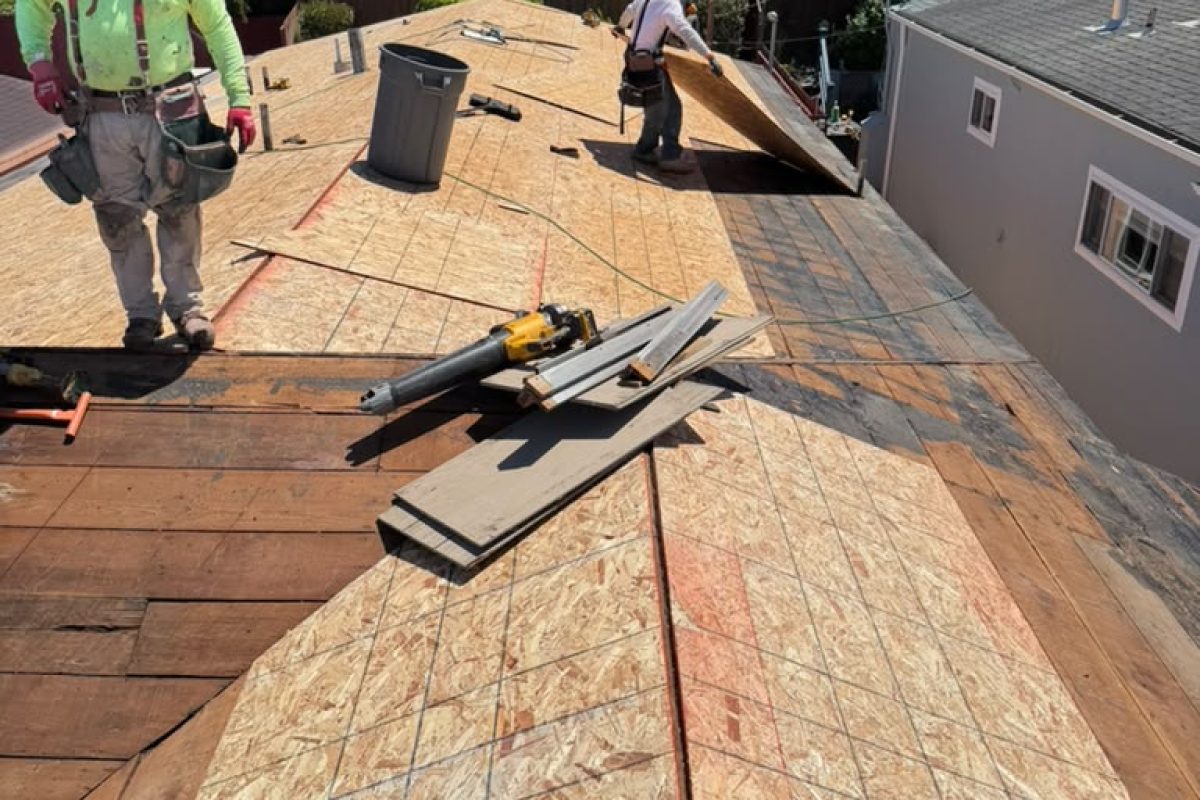
Roof repair usually makes sense when damage is limited, and the rest of the roof is in good condition. Replacement becomes more practical when deterioration is widespread, leaks keep returning, or repairs would provide little additional service life. An experienced Bay Area roofing company can assess your Walnut Creek roof and explain which option addresses the underlying problem. The decision involves more than the roof’s age or the size of a ceiling stain. Material condition, previous repairs, underlying damage, and the scope of each estimate all matter. This guide explains what to compare before deciding whether to repair or replace your roof.
Roof Repair vs Roof Replacement: A Quick Comparison
The following factors can help you understand a contractor’s recommendation. They are inspection considerations, rather than automatic rules.
| Factor | Repair May Be Suitable | Replacement May Be More Practical |
| Damage extent | One isolated problem | Deterioration across several sections |
| Surrounding materials | Generally sound and serviceable | Worn, brittle, or failing in multiple areas |
| Leak history | A leak with an identifiable, repairable cause | Recurring leaks despite appropriate repairs |
| Remaining service life | Repair could provide useful additional years | Extensive repairs would offer limited additional life |
| Underlying condition | Limited damage beneath the roof covering | Extensive damage requiring broader access |
| Long-term value | Repair resolves the problem without substantial remaining concerns | Repeated repairs leave significant weaknesses unresolved |
A useful professional roof inspection should identify where the problem started, how far the damage extends, and the condition of the rest of the roof.
When Roof Repair Makes Sense
A targeted repair can be a reasonable choice when the problem is contained, and the surrounding roofing system remains serviceable.
Isolated Shingle or Tile Damage
A limited area of damaged shingles or tiles may be repairable without replacing the entire roof. The contractor should inspect nearby materials and check whether compatible replacements are available. Visible damage does not always show the full extent of the problem. For example, a branch impact may damage the roof covering and components beneath it. The repair scope should reflect those findings.
A Specific Flashing Failure
Flashing manages water around chimneys, skylights, vents, and roof-to-wall connections. A failure at one junction can cause a leak even when the main roof covering remains in good condition. The repair should correct the failed detail. Repeatedly applying sealant without identifying the source can leave the underlying problem unresolved.
A Roof With Useful Life Remaining
A newer roof with an isolated defect is a different situation from an aging roof with deterioration across several slopes. Ask whether the proposed repair should provide lasting protection or act as a temporary measure before replacement. Base the answer on the roof’s condition, with photographs explaining the findings.
When Roof Replacement Deserves Consideration
Replacement becomes more practical when repairing individual defects would leave substantial problems elsewhere.
Widespread Deterioration
Curling, damaged, or missing shingles across multiple sections deserve a broader assessment. The contractor should explain whether surrounding materials can support reliable repairs. The same principle applies to other roof types: evaluate the system’s condition rather than focusing only on one visible defect.
Recurring Leaks
A leak that returns after repairs needs further investigation. Possible issues include an unresolved flashing detail, deteriorated underlayment, or a wider installation problem. Recurring leaks do not automatically require replacement. However, any additional repair should clearly explain why the earlier work failed and how the new scope addresses the cause.
Extensive Underlying Damage
Roof decking and other concealed components may need attention alongside the visible covering. Ask which damage has been confirmed, which areas remain inaccessible, and how additional work would be priced if discovered during tear-off. A sagging roof or ceiling warrants prompt professional assessment before you make routine repair decisions.
Limited Value From Further Repairs
The lowest upfront price does not always provide the best value. A repair may be reasonable when it resolves the cause and provides useful service life. It becomes harder to justify when substantial weaknesses remain. No universal repair-cost percentage determines when every roof should be replaced. Compare the condition, scope, expected benefit, and limitations of each option.
Walnut Creek Factors That Affect the Decision
Your property’s roof design and access can influence both the repair approach and the project cost.
Drainage and Debris
Include gutters, valleys, downspouts, and roof drains in the assessment. An obstruction may contribute to water problems, but cleaning alone won’t fix damaged flashing or deteriorated roofing. Ask whether maintenance is sufficient or whether the affected components also need repair.
Roof leaks can lead to additional repair expenses if you don’t address the underlying issue promptly. To understand potential costs, read our guide to roof leak repair costs in the Bay Area for more on the factors that affect repair pricing.
Hillside Access and Roof Complexity
Steep driveways, limited staging space, multiple roof levels, and difficult access can affect equipment, labor, and debris removal. These conditions should be explained in the estimate. They may affect both a small repair and a full replacement, so compare the actual work involved.
Tile Roofs and Underlayment
Tiles that look sound do not establish the condition of the entire roof assembly. An inspection should also consider flashing and underlayment. Ask whether the work involves individual tile replacement, repairs beneath a limited section, or a broader underlayment project. Where suitable, the estimate should explain whether existing tiles can be reused.
Community Approvals
If your home belongs to an association or managed community, confirm responsibility for the roof and any required approvals. You may need to coordinate material selection, colors, access, and scheduling before work begins.
Comparing Roof Repair and Replacement Costs
A useful price comparison starts with written scopes. Two estimates may differ because they include different materials, preparation, or underlying repairs.
For a roof repair, check whether the proposal includes:
- Investigating and correcting the leak source.
- Replacing affected roofing, underlayment, and flashing.
- Repairing identified underlying damage.
- Access equipment and debris disposal.
- Written workmanship warranty terms.
For replacement, compare tear-off, the specified roof system, flashing, disposal, permit responsibilities, and any ventilation work. Ask how concealed decking damage will be documented and approved. Also confirm that estimates use the actual roof area, rather than treating home floor area as the same measurement. Equinox Roofing’s Bay Area roof replacement cost guide explains factors that can affect a larger project. A property-specific estimate is still needed to establish the scope and price.
Permits, Energy Requirements, and Ventilation
Walnut Creek lists reroofing among work requiring a building permit. The city applies the 2025 California building codes to permit applications submitted on or after January 1, 2026. Confirm the requirements for your particular project before work begins.
California roof energy requirements depend on factors including building type, roof slope, climate zone, and replacement scope. Exceptions and alternative compliance provisions may apply. A contractor should explain the applicable approach rather than assuming every project requires the same materials.
Ventilation should also be assessed. Replacement does not automatically include new ridge and soffit vents. The estimate should identify which ventilation components will remain and which improvements, if any, are included.
Does Insurance Cover Roof Repair or Replacement?
Insurance may cover damage caused by a covered event, such as wind or a fallen tree. That does not guarantee payment for full replacement. Coverage depends on the cause of loss, policy terms, exclusions, limits, and deductibles. California’s Department of Insurance recommends documenting damage, retaining repair records, and checking coverage with the insurer. Keep photographs, inspection findings, estimates, and receipts. Ask your insurer about its inspection requirements before permanent work begins, and safely arrange any necessary temporary protection.
Frequently Asked Questions
Can one leak be repaired without replacing my Walnut Creek roof?
Yes, an isolated leak may be repairable if you can correct the cause and the surrounding roof remains serviceable. The inspection should identify the source and extent of the damage before determining the work needed.
Does an older roof automatically need replacement?
No. Age provides context, but material condition, installation quality, leak history, and underlying damage also matter. A replacement recommendation should explain what is failing and why repair would be insufficient.
Can a tile roof need repairs underneath intact tiles?
Yes. Visible tiles are only part of the assembly. Ask the contractor to assess the underlayment and flashing and explain whether suitable tiles can be reused during the proposed work.
Should I compare repair and replacement estimates?
When both options are technically reasonable, yes. Ask what each option resolves, what remains, and whether the repair is intended as a lasting solution or temporary protection.
Can you install new shingles over existing shingles?
Suitability depends on applicable requirements, existing layers, roof condition, and the proposed roofing system. Ask whether a recovery is permitted and appropriate, and what limitations it creates for inspecting concealed components.
What should a roof inspection include?
The scope should identify which areas were inspected, observed defects, accessible underlying damage, and any access limitations. Request photographs and a written explanation connecting the findings to the recommended work.
Ready to protect your Walnut Creek home? Get a Free Roof Estimate across the Bay Area from Equinox Roofing today.