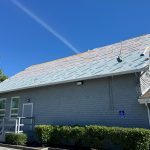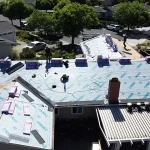
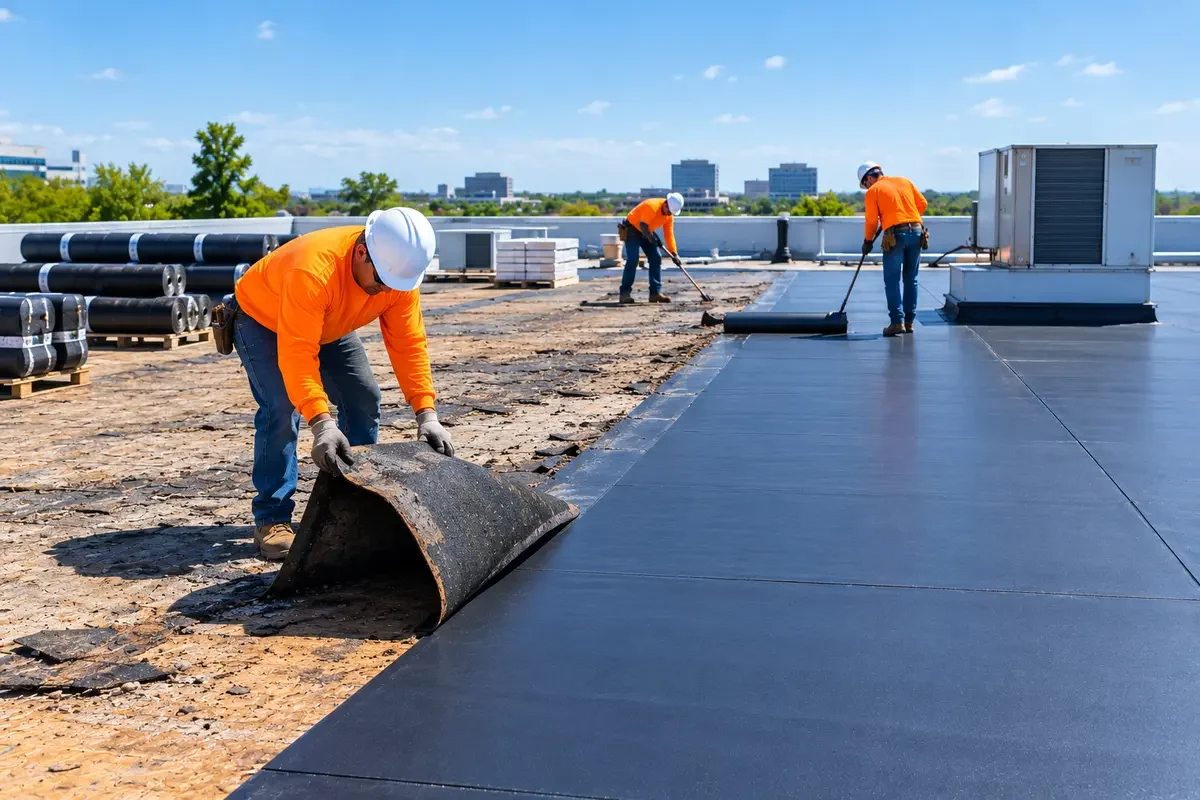
Commercial roof replacement in the Bay Area typically costs about $7–$16 per square foot in 2026, putting a 20,000 sq ft building at roughly $140,000–$320,000. Where you land in that range depends on the commercial roofing system, the insulation your building needs, how much of the deck needs repair, and how complex the roof is. This guide breaks down commercial roofing prices by system, building size, and scope; explains when a coating can replace a full reroof; and covers how to schedule a replacement without closing your business.
All prices below are estimates for budgeting. Verify them against a written bid for your building. Actual costs depend on roof condition, access, code requirements, and current labor and material rates.
Commercial Roof Replacement Cost in the Bay Area: Per Square Foot and Total
Most Bay Area commercial reroofs are priced per square foot of roof area and include tear-off, insulation, membrane, flashing, and disposal. Large roofs usually cost less per square foot than small ones, because mobilization, equipment, and crew costs spread across more area.
| Roof size | Estimated total cost |
|---|---|
| 10,000 sq ft | $70,000 – $160,000 |
| 20,000 sq ft | $140,000 – $320,000 |
| 50,000 sq ft (typical warehouse) | $300,000 – $700,000 |
Warehouse and industrial roofs. Large, open industrial roofs usually land at the lower end of the per-square-foot range because crews and equipment spread across more area. Skylights, rooftop equipment, and wet insulation under an old membrane can still push industrial roof replacement cost up, and deck repairs are the most common reason a warehouse reroof exceeds its bid.
Here is where the money goes on a typical full replacement:
| Cost component | Estimated cost per sq ft |
|---|---|
| Tear-off and disposal | $1.00 – $3.00 |
| Insulation (to current code) | $1.50 – $4.00 |
| Membrane and installation | $3.50 – $6.50 |
| Flashing, edge metal and drains | $0.75 – $2.50 |
Permit fees are separate. They are set by your city or county and are often based on project value.
Need a number for your building? Request a free commercial roof inspection and get a written bid based on measured roof dimensions and your roof’s condition.
Commercial Flat Roof Replacement Cost per Square Foot by System (TPO, PVC, EPDM and More)
Most commercial buildings have flat or low-slope roofs, so the systems below are also the standard choices for a commercial flat roof replacement. The prices are installed estimates per square foot. Deck repairs found after tear-off are extra, so ask each bidder for unit prices in writing.
| System | Installed cost per sq ft | Typical lifespan | Best for |
|---|---|---|---|
| TPO (60-mil) | $7 – $13 | 15–25 years | Reflective, widely used, good fit for cool-roof requirements |
| PVC | $9 – $15 | 20–30 years | Restaurants and buildings exposed to grease, oils or chemicals |
| EPDM | $6 – $12 | 20–30 years | Durable rubber membrane; may need a white membrane or coating for cool-roof compliance |
| Modified bitumen | $8 – $14 | 15–25 years | Heavy foot traffic and rooftop equipment |
| Metal (standing seam) | $12 – $25 | 40+ years | Longest life; higher upfront cost |
| Coating/restoration | $2.50 – $6 | 10–15 years added | Sound, dry roofs that don’t need full replacement |
TPO and PVC are both heat-welded, reflect sunlight, and cut cooling costs. PVC costs more and resists grease and chemicals better. The TPO vs. modified bitumen vs. roof coatings comparison covers how each flat roof system performs.
What Drives Commercial Roof Replacement Cost in the Bay Area
Roof size and complexity. Every HVAC unit, skylight, pipe, and drain needs to be flashed by hand. A simple open roof costs less than one crowded with equipment.
Insulation and energy code. California’s energy code sets insulation and, for many commercial roofs, cool-roof requirements. The specifics depend on your climate zone, roof slope, and how much of the roof is replaced. Your contractor should confirm compliance before bidding, because it changes the scope.
Number of layers to remove. Removing a single layer is standard. Multiple layers add labor and disposal weight.
Deck and insulation condition. Wet insulation and rotted deck found after tear-off add cost. This is the most common reason a final bill exceeds the bid, so request a pre-bid moisture and condition survey.
Building height and access. Tall buildings and tight urban sites may need cranes, material hoists, and traffic control, all of which add time and cost.
Drainage. Standing water is one of the biggest causes of flat roof leaks and early membrane failure. When you replace a roof, it’s the time to add tapered insulation or additional drains.
Labor. Bay Area roofing labor costs more than most of the state, and a fast, safe crew affects both price and schedule.
Roof Restoration vs. Replacement: When a Coating Is Enough
A coating can be the right call when the membrane is aging, but the insulation and deck are dry and sound. It typically costs a fraction of full replacement and adds roughly 10–15 years. It’s the wrong call when the insulation is wet, the membrane is failing at the seams across large areas, or the roof has already been coated several times.
The deciding factor is moisture. A moisture survey and core samples show what’s under the membrane. If you’re not sure, start with a professional roof inspection before you decide. Smaller problems may only need repair, and roof leak repair costs depend on the cause and roof type.
How to Replace a Commercial Roof Without Closing Your Business
Most commercial re-roofs happen with the building occupied. A good plan covers:
- Phased work. Replace the roof in sections so the rest of the building stays watertight and in use.
- Tenant and staff notice. Tell occupants about noise, schedule, and any restricted areas before work starts.
- Protecting air intakes. Cover or relocate HVAC intakes when fumes or dust could enter the building.
- Site safety. Fence work zones, protect walkways and entry points, and provide fall protection that meets Cal/OSHA requirements.
- Weather plan. Tear off only what can be dried in each day. In the Bay Area, winter storms can interrupt long jobs.
- Debris and equipment staging. Agree on dumpster, crane, and material locations so parking and deliveries aren’t blocked.
Ask for the phasing plan in writing before you sign.
Commercial Roof Replacement Process: Step by Step
A commercial roof replacement follows the same sequence on most buildings. Timelines by roof size are in the next section.
- Inspection and moisture survey. Measure the roof area, check drainage, and test the insulation for moisture.
- Written scope and bid. Confirm the system, insulation, tear-off scope, and unit prices for deck repairs.
- Permit and preparation. Your contractor pulls the permit, schedules inspections, protects air intakes, fences the work zone, and agrees on dumpster and equipment staging.
- Tear-off. Remove the old membrane and insulation in sections, only as much as can be dried in each day.
- Deck repair. Replace wet or rotted deck at the agreed unit prices.
- Insulation. Install insulation to current code, adding tapered insulation or drains where water ponds.
- Membrane, flashing, and edge metal. Install the new membrane, such as heat-welded TPO or PVC, then hand-flash penetrations, edges, and drains.
- Final inspection and warranty. Pass the city inspection, walk the roof with your contractor, and collect the workmanship and manufacturer warranty documents.
Commercial Roof Replacement Timeline and Permits in the Bay Area
| Roof size | Typical timeline (weather permitting) |
|---|---|
| 10,000 sq ft | 1–2 weeks |
| 20,000 sq ft | 2–4 weeks |
| 50,000 sq ft | 4–8 weeks |
A commercial re-roof generally requires a permit from your city or county, along with inspections during the work. Fees and requirements vary by jurisdiction, so your contractor should pull the permit and schedule inspections. Build the permit and inspection timeline into your schedule, especially if you have a lease or tenant deadline.
Regular maintenance also extends a roof’s life, and a Bay Area roof maintenance checklist is a good place to start.
How to Budget for a Commercial Roof Replacement
A commercial roof is a capital expense, so budget for it with a measured scope, comparable bids, and a cushion for what’s hidden.
- Start with an inspection and moisture survey. You can’t budget for what hasn’t been measured. The survey shows whether the insulation is dry, which determines whether you need repair, coating, or full replacement.
- Collect three written bids on the same scope. Use the quote checklist below so every bidder prices the same system, insulation, tear-off, and deck-repair unit rates.
- Add a contingency. On a roof without a moisture survey, set aside roughly 10–15% above the base bid for wet insulation or deck repairs. That’s a planning estimate, not a rule. A survey that finds dry insulation lets you reduce it.
- Budget the extras separately. Permit fees, an independent roof consultant if your lender or insurer requires one, and mechanical work to disconnect and reset rooftop HVAC units are often outside the per-square-foot price.
- Time the project. Book bids and permits months ahead of the rainy season, which runs roughly October through April, so the work lands in dry-season conditions.
- Check lease and tax treatment before you sign. Under a triple-net lease, who pays for a replacement depends on the lease, so confirm with your attorney. A full replacement is generally a capital improvement, and California caps its Section 179 deduction at $25,000 per the FTB Form 3885A instructions, so talk to your CPA about timing.
How to Get an Accurate Commercial Roof Replacement Quote
A lump-sum bid with no detail is hard to compare. Ask each contractor to state:
- Roof area and how it was measured. Drone or satellite measurement is more reliable than a rough estimate.
- System and thickness. For example, 60-mil TPO, the insulation type and R-value, and the fastening or adhesive method.
- Scope of tear-off. How many layers, and what happens if wet insulation or a rotted deck is found.
- Unit pricing for deck repairs. A per-sheet or per-square-foot price helps avoid later disputes.
- Permits and inspections. Who pulls them and who’s responsible for passing them.
- Phasing and safety plan. How the building stays operating and how workers are protected.
- Warranty. Equinox provides a 10-year workmanship warranty. Ask about the manufacturer warranty on the specific membrane you choose.
- License and insurance. Verify the CSLB license at cslb.ca.gov.
Our commercial roofing services cover replacement, repair, and inspection for commercial buildings.
FAQs
How much does a commercial roof cost? Commercial roofing prices in the Bay Area run about $7–$16 per square foot in 2026. That works out to roughly $70,000–$160,000 for a 10,000 sq ft roof and $300,000–$700,000 for a 50,000 sq ft roof. The total depends on the roofing system, insulation, deck repairs, and site access. A coating costs less ($2.50–$6 per square foot) but only works on dry, sound roofs.
What does it cost to replace a commercial roof in the Bay Area per square foot? Most projects run about $7–$16 per square foot in 2026. TPO and EPDM are on the lower end, PVC and modified bitumen are in the middle, and metal is at the top. Coatings cost far less but only work on sound roofs.
How much does a 20,000 sq ft commercial roof replacement cost? Roughly $140,000–$320,000, depending on the system, insulation, deck repairs, and site access.
How much does a commercial flat roof replacement cost? Commercial flat roof replacement runs about $6–$15 per square foot installed for the main membrane systems: EPDM $6–$12, TPO $7–$13, modified bitumen $8–$14, and PVC $9–$15. Deck repairs found after tear-off are extra, so request unit pricing before you sign.
How long does a commercial roof replacement take? A 10,000 sq ft roof typically takes 1–2 weeks and a 20,000 sq ft roof 2–4 weeks. Larger roofs take longer, and winter weather can add delays.
Can my business stay open during a roof replacement? Usually yes. Most commercial re-roofs are phased in sections so the building stays in use. Ask for a written phasing and safety plan before work begins.
Should I restore my commercial roof or replace it? A coating can work if the membrane is aging, but the insulation and deck are dry and sound. If moisture is trapped or seams have widespread failure, replacement is the better investment. A moisture survey settles it.
Do I need a permit to replace a commercial roof? Generally yes. Your city or county sets the permit fees and inspection requirements. Your contractor should pull the permit and schedule inspections.
Get a Written Commercial Roof Replacement Bid
Equinox Roofing Solutions has completed 1,000+ roofs, holds a 4.9★ rating on Google and Yelp, and offers 24/7 emergency service and a 10-year workmanship warranty. Schedule a free commercial roof inspection and get a detailed written bid for your building.