
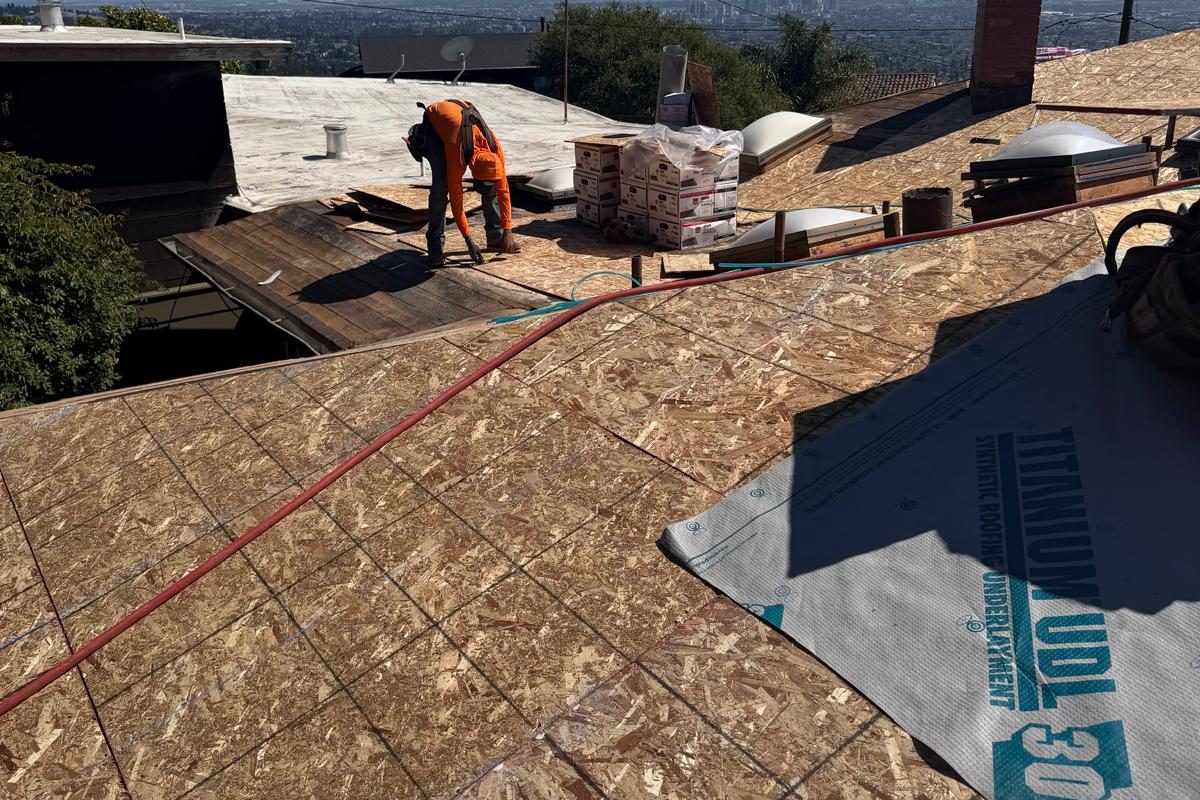
When water starts dripping through your ceiling during a storm, protecting people comes first. Keep everyone away from wet electrical fixtures, sagging ceilings, and visibly damaged areas. Contain water only where it is safe, then contact an experienced Bay Area roofing company to arrange an assessment and temporary protection. Emergency roof repair in the Bay Area usually involves two stages: limiting further water entry and completing permanent repairs once conditions allow. Understanding that distinction helps you make informed decisions without rushing into unsafe work.
When Is a Roof Leak an Emergency?
An active leak needs prompt attention, especially when water is spreading or more rain is expected. Some conditions also require help beyond a roofing contractor.
| What You Notice | What to Do |
| Water dripping into an otherwise safe area | Keep people clear, contain drips where safe, and contact a roofer |
| Water near lights, outlets, wiring, or an electrical panel | Avoid touching electrical equipment and seek qualified electrical assistance |
| A bulging ceiling, falling material, or visible structural movement | Leave the affected area and seek urgent professional assessment |
| A tree impact or large opening in the roof | Keep away from the damaged section and arrange professional help |
| Fire, sparks, collapse, or downed power lines | Move to a safe location and call 911 |
Do not assume the building is safe simply because the leak appears small. Follow instructions from emergency responders and local authorities.
5 Steps to Take During a Roofing Emergency
1. Keep People Away From Hazards
Move children, pets, and other occupants away from the leak. Do not stand beneath sagging drywall or enter an attic to investigate during an active emergency. If water is near electrical fixtures or equipment, do not touch switches, plugs, or wet appliances. Never enter standing water to reach an electrical panel. Contact an electrician or utility provider when you need safe electrical isolation. Do not climb onto the roof or use a ladder during rain, strong winds, or other unsafe conditions.
2. Limit Interior Damage Where Safe
If the area is free of electrical and ceiling hazards, place a bucket or plastic container beneath the drip. Move dry furniture, rugs, documents, and other belongings out of the affected area when you can do so safely. Do not handle wet electronics or place yourself beneath a bulging ceiling to protect belongings. Leave ceiling puncturing, damaged-material removal, and access to unstable areas to qualified professionals.
3. Contact an Emergency Roofing Contractor
Call a roofing contractor promptly and describe what is happening. Useful information includes:
- Your address and a callback number.
- When the leak started and whether it is continuing.
- Which rooms or roof sections appear affected.
- Any visible tree impact, missing materials, or exterior debris.
- Electrical hazards, ceiling movement, or access restrictions.
- Photographs taken from a safe location.
Ask whether the proposed visit includes inspection, temporary protection, or permanent repair. Confirm current availability and any emergency callout charges before authorizing work.
4. Document the Damage Safely
Photograph the affected room, ceiling stains, damaged belongings, and visible exterior damage from ground level. Record when you first noticed the leak and keep copies of contractor communications. Do not climb onto the roof to obtain photographs or delay urgent safety measures to document damage. Keep receipts for temporary protection, cleanup, and repairs. These records help explain the loss and support an insurance assessment; they do not guarantee coverage or a particular payment.
5. Notify Your Insurer and Arrange Follow-Up Work
If the damage may involve an insurance claim, contact your insurer promptly. Ask about coverage, documentation, temporary mitigation, and inspection requirements before permanent repairs begin. Arrange a permanent repair assessment once safe access is possible. If water has soaked insulation, drywall, flooring, or concealed spaces, you may also need a water-damage restoration professional.
What Causes Roof Leaks During Bay Area Storms?
A leak that appears during a storm doesn’t always mean the storm caused the whole problem. Rain may expose an existing weakness.
An inspection may identify:
- Damaged or displaced shingles and tiles.
- Failed flashing around chimneys, skylights, vents, or roof-to-wall junctions.
- Open seams or punctures in low-slope roofing.
- Deteriorated underlayment.
- Obstructed gutters, valleys, outlets, or drains.
- Damage from falling branches or other debris.
The location of a ceiling stain may not identify the roof entry point. A useful assessment traces the water source before defining the repair. For homeowners in Walnut Creek and surrounding Contra Costa County communities, the scope should reflect the actual roof material, drainage arrangement, and damage.
How Emergency Roof Tarping Works
Professional tarping provides temporary protection over suitable damaged areas. It reduces further water entry while you arrange inspection and permanent repairs. The appropriate method depends on roof slope, material, damage, drainage, and safe access. Tarping may help with an exposed roof section or storm-created opening, but it may not resolve leaks originating at walls, flashing, or concealed roof components.
What Tarping Cannot Do
A tarp does not repair damaged decking, dry wet insulation, restore structural strength, or establish the cause of every leak. It also requires follow-up. Wind, additional rain, and movement can affect temporary protection. Ask the contractor:
- What area has been protected?
- What limitations remain?
- What should you do if water entry continues?
- When should you check the temporary protection?
- What is the next step toward permanent repair?
Avoid treating a tarp as permission to postpone repairs indefinitely.
What to Expect From 24/7 Emergency Roofing Service
Equinox Roofing offers 24/7 emergency roof repair and tarping services. Contact the team to confirm availability in your area. Round-the-clock availability does not mean we can access every roof immediately. Weather, road conditions, structural hazards, roof access, and crew availability can affect arrival times and the work that can safely proceed. An emergency response may begin with gathering information, assessing hazards, and determining whether temporary exterior protection is appropriate. Permanent repairs may require a separate visit, suitable weather, materials, and any applicable approvals.
What Affects Emergency Roof Repair Costs?
Emergency pricing depends on the work required. Ask for a clear explanation of charges rather than comparing totals alone.
Common cost factors include:
- After-hours attendance.
- Roof height, slope, and accessibility.
- The size and location of the damaged area.
- Equipment and temporary protection.
- Roofing material and matching availability.
- Damage to decking or other underlying components.
- Separate interior drying and restoration work.
Confirm whether temporary protection and permanent repairs will be quoted separately. Ask how concealed damage and additional work will be documented and approved. If the inspection identifies broader deterioration, Equinox’s Bay Area roof replacement cost guide explains factors that affect a larger project.
Does Homeowners Insurance Cover Storm Roof Damage?
Homeowners insurance may cover damage from a covered event, such as wind or a fallen tree. Coverage depends on the policy, cause of loss, exclusions, deductible, and limits. California’s Department of Insurance explains that rain damage entering through a roof opening caused by a covered event may be covered. It recommends checking policy terms, documenting damage, retaining repair records, and consulting the insurer. An emergency service invoice does not establish coverage by itself. Ask your insurer what it needs to evaluate the claim and how to proceed with necessary temporary protection.
Completing Permanent Repairs After the Emergency
Once conditions allow, the contractor should inspect the affected roofing and accessible underlying components. The permanent scope should address the actual failure and identify any related damage. Depending on the findings, work may involve replacing damaged roofing, correcting flashing, repairing decking, or addressing drainage. Interior moisture also needs attention. EPA guidance recommends drying water-damaged materials within 24–48 hours to help prevent mold growth. Where damage is extensive, or materials cannot be safely accessed and dried, seek professional restoration assistance. Before work begins, request a written scope explaining materials, exclusions, warranty terms, and how additional damage will be handled.
Frequently Asked Questions
What should I do if my roof starts leaking at night?
Keep everyone away from electrical hazards and damaged ceilings. Contain drips only where safe, contact an emergency roofer, and document the damage without entering unsafe areas. Call 911 for immediate threats such as fire or collapse.
How quickly can an emergency roofer reach Walnut Creek?
Arrival times depend on weather, demand, access, site hazards, and crew availability. Describe the situation when calling and ask for the current response estimate. Roof access may need to wait until conditions are safe.
Can I put a tarp on my roof myself?
Do not climb onto a wet, storm-damaged, or wind-exposed roof. Safe access and suitable attachment require professional judgment. Focus on keeping occupants safe and arranging qualified help.
Will emergency tarping stop every roof leak?
No. Tarping may reduce water entry where it can cover the area, but some leaks require different temporary measures or repairs. An inspection is needed to identify the source.
What if my roof still leaks after it has been tarped?
Contact the contractor promptly and explain where water is entering. Continue safe interior containment, keep clear of electrical and ceiling hazards, and document changes. Do not climb onto the roof to adjust the tarp.
Does an emergency roof leak mean I need replacement?
No. An isolated problem may be repairable. Consider replacement when an inspection identifies broader deterioration or when a repair would offer limited lasting value.